
Fitness article
How to Choose a Fitness Plan and Build a Sustainable Routine

A useful fitness plan explains what to do, how to adapt it and how to judge progress. Before following an online routine, check whether its demands fit you
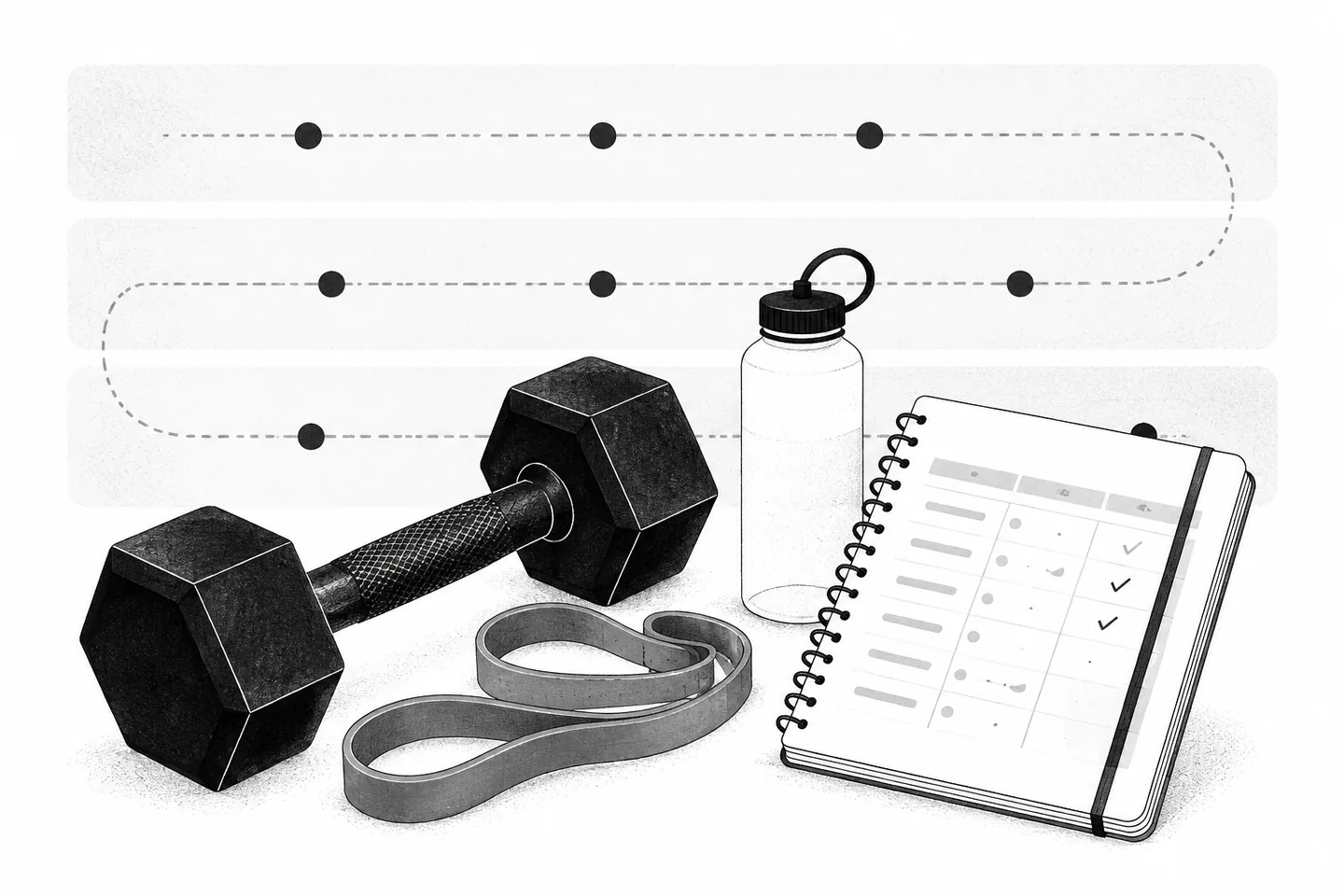
A useful fitness plan explains what to do, how to adapt it and how to judge progress. Before following an online routine, check whether its demands fit your experience, equipment and available time. A polished video may demonstrate an exercise clearly without explaining how that exercise belongs in a weekly programme.
Separate three decisions: the goal you want to work towards, the activities you can repeat and the support you need. This makes it easier to compare programmes without relying on a coach’s personality, dramatic photographs or promises of rapid change.
Choose a goal you can use
“Get fit” leaves too much undecided. A more practical starting point might be walking comfortably for thirty minutes, completing two weekly strength sessions or preparing for a recreational event. Choose one main priority so that your schedule has a clear purpose.
Distinguish an outcome from an action. Feeling more capable during daily tasks is an outcome; setting aside time for a walk is an action you can record. Track both where useful, but avoid judging the entire plan by something that may fluctuate from day to day.
Write down your starting circumstances: recent activity, equipment, realistic session length and any movements you find difficult. Include travel and preparation time. A routine requiring an hour at a distant gym asks for more than an hour in your diary. These details help expose a mismatch before you commit.
Look for a balanced structure
A routine should make room for different kinds of movement. The World Health Organization’s physical activity guidelines cover activity beyond formal exercise, including walking, cycling, household tasks and recreation. When reviewing your week, count the movement already present rather than treating gym sessions as the only activity that matters.
Check how a proposed programme combines aerobic activity and strengthening work. If it contains only one type, ask whether it is intended as a complete routine or one component. An exercise video, a specialist training block and a general weekly plan answer different needs.
The NHS guidance on strength and flexibility offers examples of strengthening activities using weights, resistance bands and bodyweight movements. Equipment is therefore one practical consideration, rather than the starting point for every decision. Look for instructions that explain technique and offer an appropriate alternative when the suggested equipment is unavailable.
Make the first week workable
Build the timetable around your ordinary week. Choose times that remain plausible when work runs late or household responsibilities change. If two planned sessions already feel difficult to accommodate, adding more creates a scheduling problem before you have begun.
For each session, know where it will happen, what equipment it requires and how long it should take. Decide on a shorter fallback version in advance. That might mean using a programme’s abbreviated session when time is limited, rather than improvising a rushed version of everything.
A simple planning checklist can keep the first week concrete:
- Set aside specific times for the activities you have chosen.
- Check access to the space and equipment before the session.
- Read the exercise instructions and note anything unclear.
- Leave room in the diary for rest and other commitments.
- Record what you complete, including any substitutions.
Treat this first timetable as a draft. Its purpose is to reveal what works in practice, including obstacles that were easy to overlook while choosing the programme.
Understand how progression works
A programme should explain when to repeat a session and when to change it. Without that guidance, you may alternate between doing too much and replacing exercises whenever they become familiar. Familiarity also gives you a more consistent basis for comparing sessions.
Progress can mean clearer technique, more controlled repetitions, greater resistance or a longer activity period. Ask which measure matters for your goal. A plan focused on learning movements should not be assessed solely by the amount of weight used.
Record enough detail to make comparisons meaningful. For a strength exercise, that may include the variation, resistance and repetitions. For a walk, it might be the route, duration and how demanding it felt. Use the same descriptions each time; vague notes such as “good workout” reveal little when you review them later.
When the programme calls for an adjustment, change one element at a time where practical. That makes it easier to understand the effect. If instructions depend on terms you do not understand, seek clarification before guessing what level of effort they require.
Check what coaching support includes
“Personalised support” is too vague to assess on its own. Read what the service actually provides: exercise selection, technique feedback, progress reviews or general messages. A downloadable plan and ongoing coaching involve different levels of interaction, even if their promotional descriptions sound similar.
Before deciding, ask questions that reveal how the programme would handle your circumstances:
- Who is the plan designed for, and what experience does it assume?
- Which qualifications are relevant to the guidance being offered?
- How are exercises adapted for limited equipment or movement restrictions?
- How is technique feedback provided, if it is included?
- What information is used to review and change the plan?
- How should missed sessions or a longer break be handled?
Look for clear boundaries as well as clear instructions. A coach should explain the scope of their role and when a question needs a different professional. If important answers remain vague, you cannot reliably judge whether the service fits your needs.
Assess nutrition guidance separately
Do not assume that a training programme’s nutrition component suits you because its exercises do. Establish whether it offers general education, meal suggestions, tracking tools or individual guidance. Those are different services and require separate consideration.
Check how the guidance accommodates food preferences, allergies, household meals, budget and the time available for cooking. A menu that depends on separate meals every evening may be impractical even when the individual recipes seem straightforward. Ask how substitutions are handled rather than assuming that every listed food is essential.
If recording meals is part of the programme, understand its purpose and whether an alternative is available. Consider what information you are comfortable sharing. Guidance should make its assumptions clear instead of presenting one tracking method as a test of commitment.
Check the practical burden of any food diary too: when you would complete it, how detailed it needs to be and who reviews it. A tool is easier to assess when you know which decision its information is meant to support.
Review the routine without starting over
At the end of the week, compare the plan with what happened. Separate scheduling problems from exercise questions. Missing a session because the journey was impractical calls for a different response from finding the instructions confusing or the session too demanding.
Use three headings in a short review: completion, experience and next change. Under completion, note the sessions or activities done. Under experience, record what felt manageable, unclear or difficult. Under next change, choose one specific adjustment, such as moving a session or asking for an exercise demonstration.
Review patterns across several entries rather than reacting to every uneven day. If the same obstacle returns, simplify the part of the routine causing it. If your main goal changes, reconsider the programme against that new goal. Keep the notes brief enough that you will actually use them when planning the following week.