Fitness article
90/90 Hip Stretch: Setup, Support and When to Stop
The 90 90 hip stretch is a seated position with one leg in front of you and the other to the side and behind you. Each knee is bent to roughly a right…
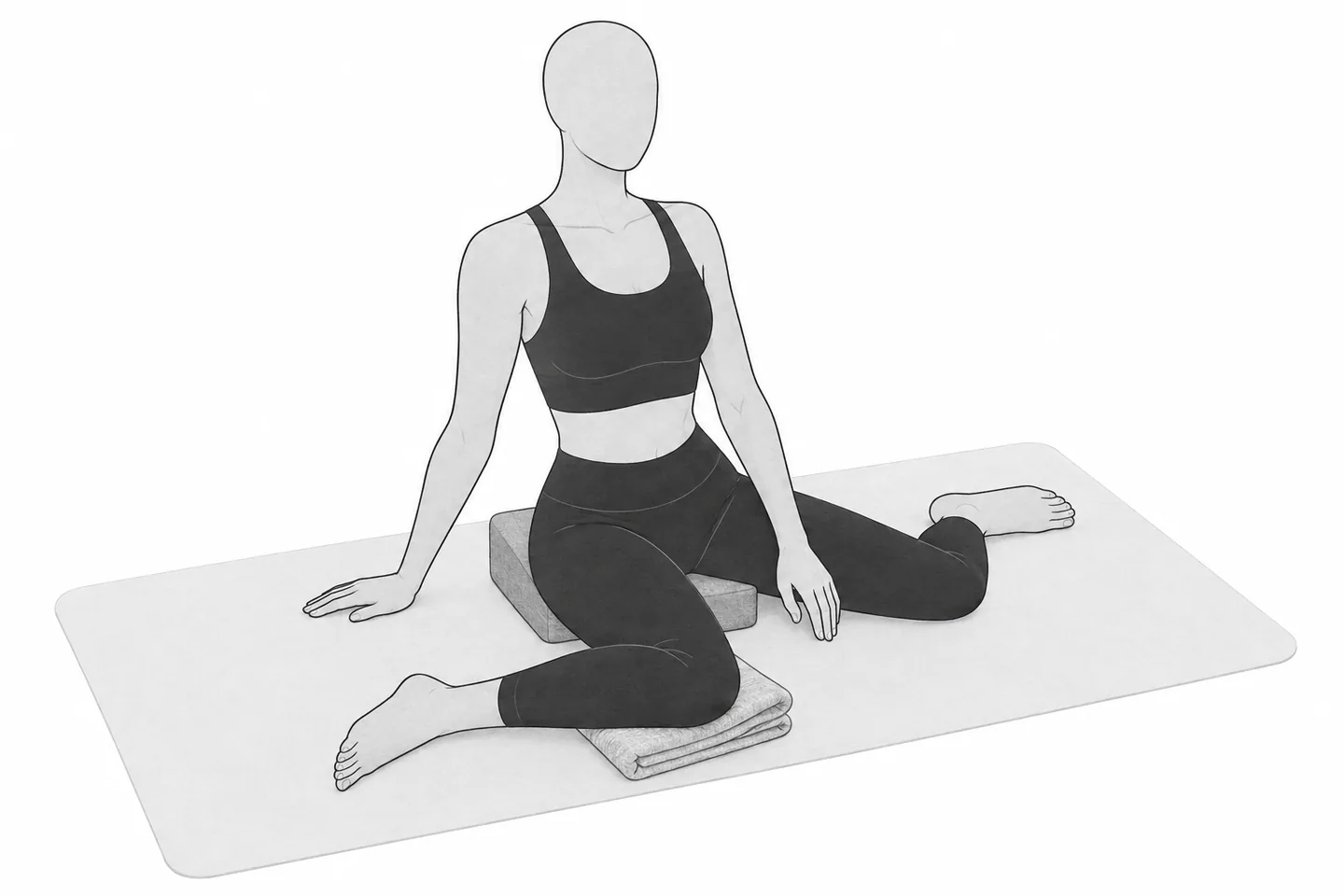
The 90 90 hip stretch is a seated position with one leg in front of you and the other to the side and behind you. Each knee is bent to roughly a right angle. It asks the two hips to rotate in different directions, which is why simply sitting upright may feel like enough. You do not need to press either knee into the floor or lean forward to make the position count.
Use this guide to find the shape of the stretch, support it where needed and recognise when to stop. The two right angles describe the general arrangement of the legs; they are not measurements to force at the expense of a comfortable hip or knee.
Set up the front leg, back leg and torso
Begin on a firm, comfortable floor surface after a little easy movement. The American Academy of Orthopaedic Surgeons’ hip conditioning guide advises warming up before its exercises and paying attention to pain. Its guide is a general safety reference, rather than an instruction sheet for 90/90.
Sit with your right leg in front. Bend the right knee so the thigh extends forward from your hip and the shin turns across your body. Let the outside of that leg rest where it comfortably reaches. Then take your left thigh out to the side and slightly behind you. Bend the left knee so its shin points back. Keep both feet relaxed.
The diagram shows the relationship between the legs, not a shape your body must copy precisely. Aim for two comfortable bends that approach 90 degrees. Do not drag the back foot farther away to make its angle look neater. The front hip rotates outward, while the back hip rotates inward; those demands can feel quite different from one side to the other.
Once the legs are placed, bring your shoulders roughly level and face your chest forward over the front leg. Let your hands rest on the floor beside the front shin if you need balance. Grow tall through the torso without arching your lower back or tipping heavily to one side. The Hospital for Special Surgery’s 90/90 instructions use the front and side leg placement and an upright, square-shouldered torso as their starting position.
Pause there and notice what you feel. If you can breathe normally and maintain a steady position, there is no need to add a forward fold. If you choose to lean later, move from the hips while keeping the torso long, and stop before your back collapses or a joint begins to pinch. Return upright before changing sides.
Support the position instead of forcing it
If the pelvis tips backward or you have to prop yourself up with straight, strained arms, place a firm pillow or yoga block under your sitting bones. A small lift may make it easier to sit upright without asking as much inward rotation from the back hip. If the front knee hangs above the floor, put a folded pillow or block beneath it. Leave the knee resting on the support; do not push it down.
These are the two adjustments recommended in Cleveland Clinic’s guide to the 90/90 stretch. Choose a height that makes the position steadier rather than trying to use the thinnest possible prop. You can also keep a hand on the floor for balance. A supported version is still the exercise; the goal is controlled, comfortable movement, not floor contact at every point.
Check the back knee as carefully as the front one. If placing the back leg produces pressure inside the knee, bring the leg into a less demanding position or leave the stretch. A pillow under your pelvis cannot make a painful knee position safe. Likewise, if an upright torso is possible only by twisting your shoulders or holding your breath, reduce the position before considering a deeper stretch.
If you cannot enter 90/90 comfortably
There is no need to wrestle your legs into place. Start with an easier movement that lets you explore the hip without the back knee folded behind you. One option is a gentle gluteal stretch while lying on your back: bend both knees with your feet supported, place one ankle across the opposite knee, and move only until you feel a mild stretch around the buttock. Keep the movement small and stop if either hip or knee objects. The South Tees Hospitals physiotherapy instructions describe this lying position and specifically warn against using it after a hip replacement.
This alternative does not reproduce both hip rotations of 90/90. It offers a simpler way to work with the front-hip side of the position. If lying down, crossing the ankle or getting up from the floor is uncomfortable, leave that option too and ask a physiotherapist or other qualified clinician for an exercise suited to you.
Which hip should feel the stretch?
With the right leg in front, you may notice a mild stretch around the right buttock or outer hip. The back, left leg can create a different feeling around the front of that hip. Cleveland Clinic’s explanation of the position describes the front and back legs as working different areas. The exact sensation varies, so use its location as information rather than as proof that you have reached a particular muscle.
A mild, broad stretching sensation that stays comfortable while you breathe is different from a sharp catch or a pinch deep in the front of the hip. Pain at either knee is also a reason to stop. Do not try to make a pinching sensation disappear by leaning farther forward, pressing the knee down or holding the pose longer.
Floor-position troubleshooting
- Front knee above the floor: rest it on a pillow or block. Do not push it down to complete the shape.
- Back knee strained: move the leg to a less demanding position. If the strain remains, leave the stretch.
- Sharp hip pinch or groin pain: come out of the position. Do not lean farther forward to try to remove it.
- Rounded back or tense arms: raise the pelvis and use light hand support. If you still cannot sit comfortably, choose another movement.
After practising one side, change the legs without swinging quickly through a painful range. It is reasonable for the second side to feel different. Set it up afresh, using the support it needs rather than copying the first side’s pillow height or leg angle. A difference in sensation is a reason to pay attention, not a reason to force the stiffer side to match.
When to stop and seek individual advice
Stop the stretch if you feel pinching, sharp pain, knee pain or discomfort that continues after you leave the position. The Cleveland Clinic guidance cautions that 90/90 may be unsuitable for people with hip impingement, knee problems or a hip or knee replacement. If any of those apply to you, seek individual advice before trying to make the pose work with more props or a longer hold.
Exercise after an injury or operation needs guidance that reflects your own restrictions and recovery. The AAOS hip guide likewise advises discussing the appropriate exercises with a doctor or physical therapist and not ignoring pain during exercise. Neither a neat-looking right angle nor someone else’s range of motion can tell you whether this stretch is suitable for your joint.